- The Great Reset
- Posts
- April Week 1 -2026
April Week 1 -2026
( 1 ) AI Agents and the Future of Digital Assets( 2 ) Google TurboQuant Shifts AI Hardware Landscape( 3 ) Dynamic Power Allocation: A New Strategy for AI Scaling

Lu Diaz
March 30, 2026
In partnership with

88% resolved. 22% stayed loyal. What went wrong?

That's the AI paradox hiding in your CX stack. Tickets close. Customers leave. And most teams don't see it coming because they're measuring the wrong things.
Efficiency metrics look great on paper. Handle time down. Containment rate up. But customer loyalty? That's a different story — and it's one your current dashboards probably aren't telling you.
Gladly's 2026 Customer Expectations Report surveyed thousands of real consumers to find out exactly where AI-powered service breaks trust, and what separates the platforms that drive retention from the ones that quietly erode it.
If you're architecting the CX stack, this is the data you need to build it right. Not just fast. Not just cheap. Built to last.
Good morning!
Coffee in hand? Let’s dive into this week’s most insightful reads.
( 1 ) AI Agents and the Future of Digital Assets
( 2 ) Google TurboQuant Shifts AI Hardware Landscape
( 3 ) Dynamic Power Allocation: A New Strategy for AI Scaling
CRYPTO RESET
AI Agents and the Future of Digital Assets
A fundamental shift is currently reshaping the digital asset landscape as the focus moves from retail speculation to the emergence of an autonomous agent economy. Industry experts are warning that the total addressable market for blockchain technology is expanding by orders of magnitude as billions of artificial intelligence agents begin to require neutral financial rails. Unlike human users who operate within the limitations of traditional banking hours and cent based currency divisions, these digital entities require microtransactions that occur thousands of times per second.
Current market data indicates that the infrastructure for this transition is already being built. Solana has recently processed over 15 million on-chain payments initiated by AI agents for services such as data access and compute resources. Because machines cannot open traditional bank accounts, crypto wallets have become the default treasury systems for the next generation of software. This necessity is driving a massive convergence between Bitcoin mining and AI infrastructure. Publicly listed miners are currently pivoting toward data center operations, securing over 70 billion dollars in contracts with major technology firms to host the high performance computing required for large language models.
This structural metamorphosis is also visible in the developer community. While traditional crypto coding activity has slowed, a significant portion of that talent has migrated into AI agent frameworks. These developers are now building decentralized finance rails specifically for autonomous treasuries. As the global economy moves toward a state where all data is tokenized and tradable, the role of blockchain shifts from a speculative tool to the essential plumbing of a machine led marketplace. This evolution suggests that the future of digital finance will not be defined by human traders, but by the invisible, high frequency economic activity of billions of autonomous agents.
2026’s biggest media shift
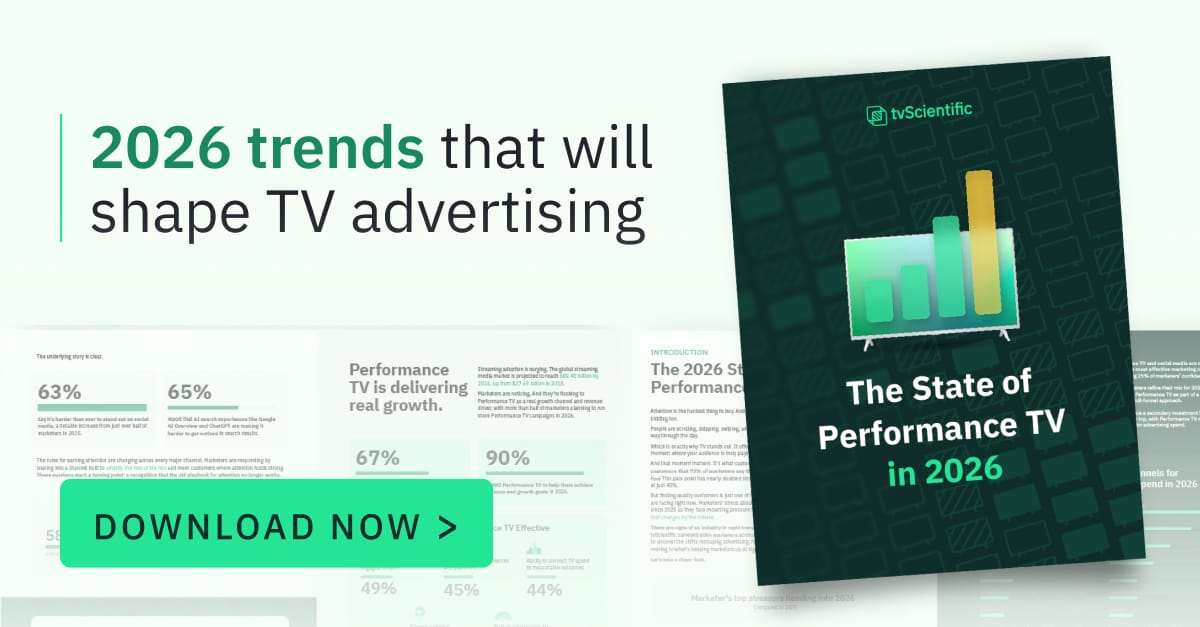
Attention is the hardest thing to buy. And everyone else is bidding too.
When people are scrolling, skipping, swiping, and split-screening their way through the day, finding uninterrupted moments where your audience is truly paying attention is the priority.
That’s where Performance TV stands out.
Check out the data from 600+ marketers on the most effective channels to capture audience attention in 2026.
AI RESET
Google TurboQuant Shifts AI Hardware Landscape
Google Research has unveiled a new compression algorithm named TurboQuant that promises to fundamentally alter the efficiency of large language models and the hardware required to run them. The breakthrough focuses on optimizing the key value cache memory, a notorious bottleneck in modern artificial intelligence processing. By reducing memory requirements by at least six times while simultaneously delivering up to an eightfold increase in speed, the technology addresses the primary technical hurdles that have governed the AI chip market for years.
The implications of this development are immediate for the semiconductor industry. Historically, the race for AI dominance has been defined by the physical amount of high bandwidth memory a chip could house. This physical constraint forced developers toward increasingly expensive and power hungry hardware solutions to maintain performance. TurboQuant effectively bypasses these hardware limitations through mathematical innovation, achieving these efficiency gains with reported zero loss in model accuracy. This suggests that existing, less powerful hardware could soon perform tasks previously reserved for the most elite enterprise grade processors.
Industry analysts are closely monitoring how this software optimization will impact the valuation of dominant chip manufacturers. If the demand for massive memory capacity decreases because models are becoming significantly more compact and efficient, the premium on high end AI silicon may face a downward correction. Furthermore, this efficiency leap enables more sophisticated AI applications to run locally on consumer devices rather than relying on massive cloud server farms. By lowering the entry barrier for high performance computing, Google is shifting the competitive focus from raw hardware power to algorithmic sophistication. As TurboQuant begins to integrate into broader workflows, the traditional cycle of hardware upgrades may see its first major disruption in the generative AI era.
AI RESET
Dynamic Power Allocation: A New Strategy for AI Scaling
The rapid expansion of artificial intelligence infrastructure is hitting a significant roadblock: the rigid energy demands of global power grids. NVIDIA CEO Jensen Huang has proposed a fundamental shift in how data centers interact with utilities, suggesting that the industry move away from the traditional requirement of constant peak power availability. Instead, Huang advocates for a dynamic model where data centers utilize the massive amounts of excess capacity currently sitting idle in the power grid during non-peak hours.
Standard power grids are engineered to handle worst case scenarios, such as extreme weather events, which only occur a small fraction of the year. For the remaining 99% of the time, the grid operates at roughly 60% capacity, leaving a vast reservoir of unused energy. Huang suggests that by designing AI systems that can gracefully degrade their performance or shift workloads during rare periods of peak societal demand, data centers could tap into this excess power without requiring the multiyear grid expansions currently stalling the industry. This approach would involve sophisticated software architectures capable of reducing computing rates or increasing response latency when the grid is under pressure, rather than demanding 100% uptime through rigid, high performance contracts.
Beyond energy management, the scaling of AI is also transforming the global semiconductor supply chain. NVIDIA is moving toward a rack-scale computing model, where entire supercomputers are integrated and tested at the manufacturing stage before being shipped as finished units. This shift requires massive capital investments from suppliers in high-bandwidth memory and advanced packaging. By fostering a shared long-term vision with key partners like TSMC and SK Hynix, the industry is attempting to synchronize production with the accelerating demand for inference and training. This collaborative strategy aims to overcome physical manufacturing bottlenecks and ensure that the infrastructure for a million-fold increase in computing power remains economically and technically viable.
Help us spread the word and tell a friend:
Want to advertise with us?
DISCLAIMER:
This newsletter is strictly educational and is not investment advice or a solicitation to buy or sell any assets or to make any financial decisions or investments. Please be careful and do your own research.